Which NYC Buildings Must Comply with Local Law 152
New York City property owners are responsible for meeting several building safety and maintenance requirements, and Local Law 152 of 2016 is an important part of that responsibility. The law establishes periodic inspections of gas piping systems to help identify gas leaks, unsafe conditions, illegal connections, and other potential hazards.
However, not every building follows the same requirements. Whether Local Law 152 applies to a property depends primarily on its occupancy classification, gas piping status, and applicable exemptions.
For landlords, multifamily building owners, commercial property owners, and property managers, understanding which buildings must comply is the first step toward avoiding missed deadlines, incomplete filings, and potential civil penalties.
In this guide, Gas Detectives explains which NYC buildings are generally subject to Local Law 152, which properties may qualify for an exemption, how to check your building’s status, and what steps to take to meet the applicable requirements.
What Is Local Law 152?
Local Law 152 of 2016 requires periodic inspections of gas piping systems in most New York City buildings, except those classified in Occupancy Group R-3, which generally includes one- and two-family homes.
The purpose of these inspections is to identify unsafe or hazardous conditions associated with gas piping systems before they become more serious problems.
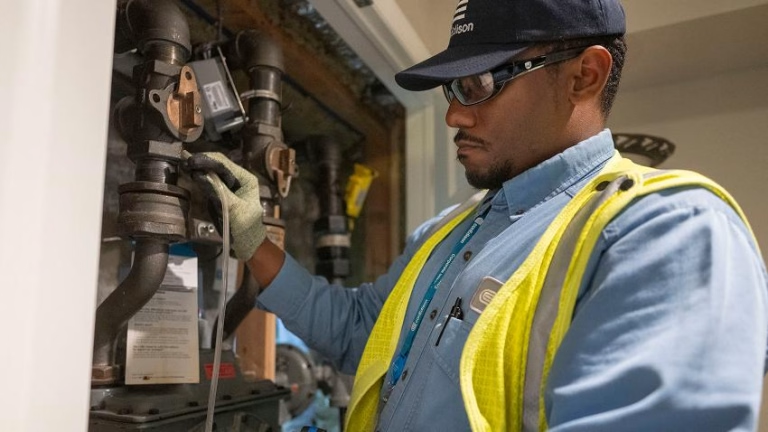
Inspections must be conducted by a Licensed Master Plumber (LMP) or a qualified individual working under the required supervision of an LMP. The inspection includes a visual examination of applicable exposed gas piping and a leak survey in the areas specified by the law.
Depending on the building, inspectors may need to examine exposed gas piping near the building’s point of entry, gas meters, public hallways, corridors, and mechanical or boiler rooms.
Local Law 152 also establishes documentation and filing requirements. Owners must ensure that the required certification is submitted to the NYC Department of Buildings (DOB), even when the inspection itself has already been completed.
The key point: Property owners should not assume their building is exempt simply because it is small, has limited gas usage, or does not currently have an active gas account. The building’s classification and actual gas piping status must be evaluated.
1. Which NYC Buildings Must Comply with Local Law 152?
Local Law 152 generally applies to buildings that are not classified in Occupancy Group R-3, subject to the law’s specific exceptions.
This means that many residential, commercial, mixed-use, and other non-R-3 properties may be required to comply.
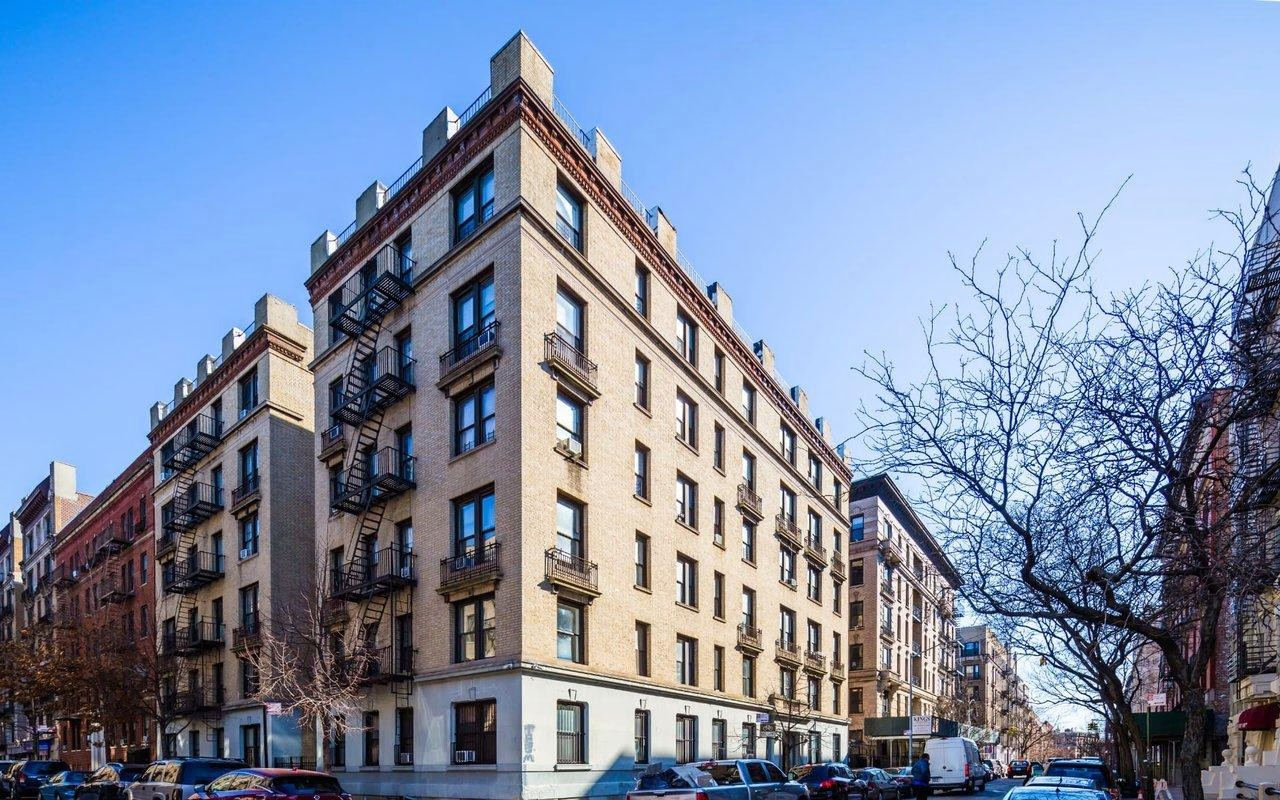
Multifamily residential buildings
Apartment buildings and other multifamily residential properties are common examples of buildings subject to Local Law 152.
Examples may include:
Apartment buildings with three or more dwelling units.
Multifamily rental properties.
Condominium buildings.
Cooperative apartment buildings.
Residential buildings containing gas piping systems that do not qualify for an applicable exemption.
Owners and property managers should confirm the building’s official occupancy classification rather than relying only on the number of apartments or the property’s marketing description.
A building’s configuration, legal occupancy, and official records may affect how the requirement applies.
Mixed-use buildings
Many NYC properties combine residential apartments with commercial spaces, such as retail stores, restaurants, offices, or other businesses.
These buildings may be subject to Local Law 152 when they are not classified in Occupancy Group R-3.
For example, a building with apartments above a ground-floor retail space may fall within the law’s requirements.
Owners should not assume that a building is exempt because only part of the property is residential or because the commercial tenant manages its own interior space.
The inspection requirements generally cover applicable gas piping and designated common areas, while the law excludes gas piping, equipment, and appliances located inside individual dwelling units from the inspection scope, subject to the access and point-of-entry requirements.
Commercial buildings
Commercial properties that are not classified in Occupancy Group R-3 are generally covered by Local Law 152.
Examples may include:
Office buildings.
Retail buildings.
Restaurants and food-service properties.
Commercial buildings with mechanical or boiler rooms.
Buildings used for business or other nonresidential purposes.
The property’s actual classification and gas piping status should be verified before determining its compliance obligations.
A commercial property does not automatically become exempt because it has no residential tenants. Similarly, having limited gas usage does not, by itself, establish an exemption.
Industrial and other nonresidential properties
Industrial, institutional, and other nonresidential buildings may also fall within Local Law 152’s requirements when they are not classified in Occupancy Group R-3.
Owners should review the property’s official records and confirm whether an exception applies.
The safest approach is to verify the specific building rather than making assumptions based on how the property is used.
Local Law 152 inspection schedule
The current inspection cycles include the following community district groups:
Cycle 1, Sub-cycle A: Community Districts 1, 3, and 10 — January 1, 2020, through June 30, 2021, with the original deadline extended by local law.
Cycle 2, Sub-cycle A: Community Districts 1, 3, and 10 — January 1 through December 31, 2024.
Cycle 2, Sub-cycle B: Community Districts 2, 5, 7, 13, and 18 — January 1 through December 31, 2025.
Cycle 2, Sub-cycle C: Community Districts 4, 6, 8, 9, and 16 — January 1 through December 31, 2026.
Cycle 2, Sub-cycle D: Community Districts 11, 12, 14, 15, and 17 — January 1 through December 31, 2027.
What if you miss the deadline?
DOB provides a process for requesting a one-time 180-day extension of the applicable inspection deadline.
Owners must follow the required procedure and complete the inspection during the extension period. The required certification must also be submitted within the applicable timeframe.
An extension should not be assumed to be automatic. Owners should review the current DOB instructions and act before the deadline whenever possible.
How Gas Detectives Can Help NYC Property Owners
Understanding whether a building is subject to Local Law 152 is the first step. Property owners must then determine the applicable inspection cycle, arrange the required inspection, ensure the necessary documentation is filed, and address any conditions that require correction.
Gas Detectives helps NYC property owners and property managers navigate gas inspection and compliance requirements.
Whether you manage a multifamily residential building, a mixed-use property, or a commercial building, taking a proactive approach can help you identify outstanding requirements and avoid last-minute compliance issues.
If you are uncertain about your property’s Local Law 152 status, reviewing the official DOB records and seeking guidance from qualified professionals can help you determine the appropriate next step.
Contact Gas Detectives
Phone: 212-863-9451
Email: gas@hpdhelp.com